Unlocking Creative Potential: The Role of KDP Coloring Page Background Vol.1-47 in Modern Design Workflows
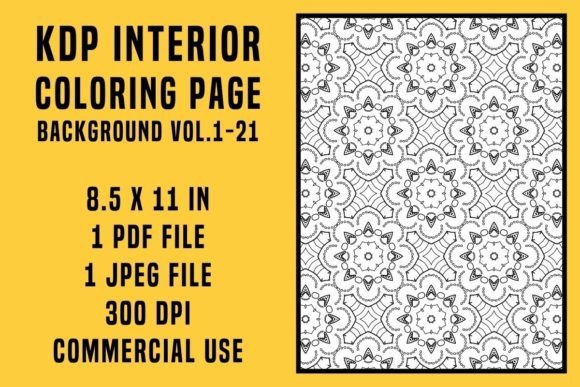
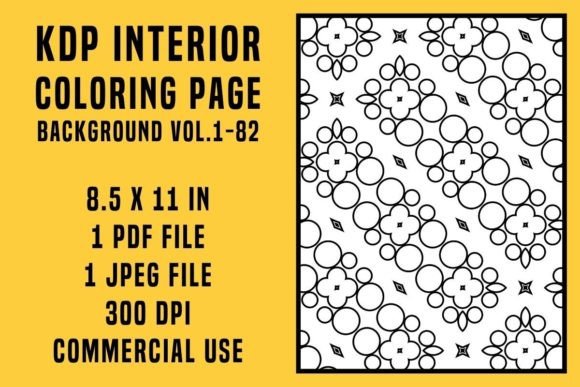
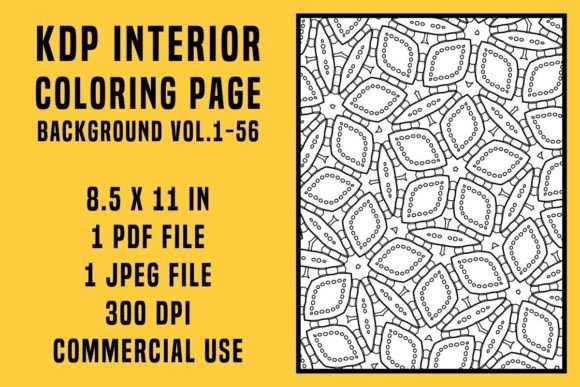
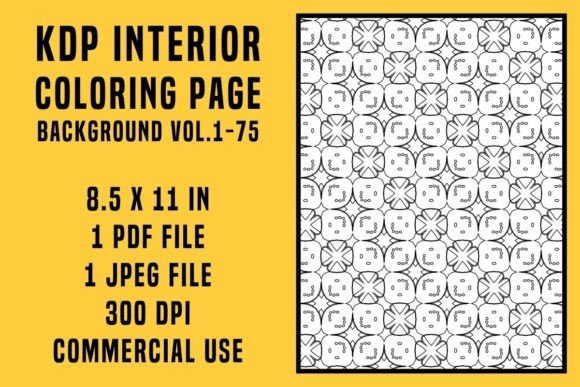
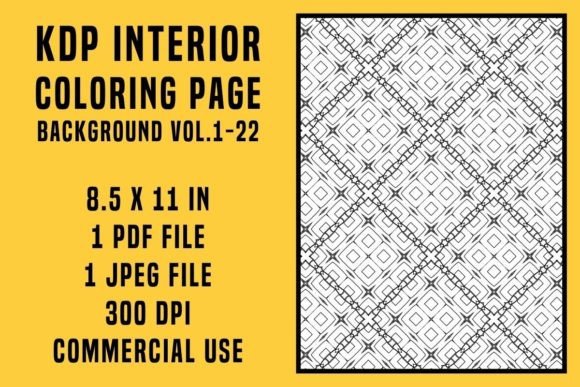
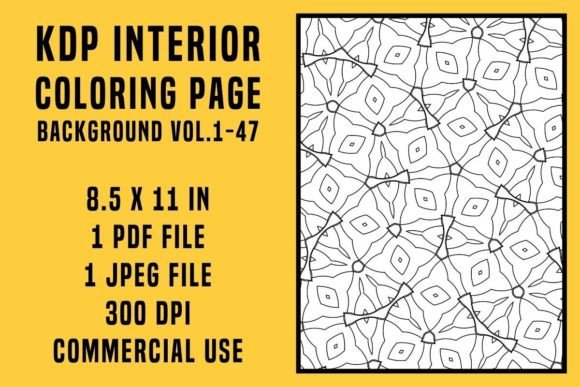
The digital creator's toolkit is constantly evolving, filled with assets designed to streamline production and enhance quality. Among these, the collections known as KDP Coloring Page Background Vol.1-47 and KDP Interior Coloring Page Background Vol.1-47 have emerged as versatile foundational resources. These are not merely collections of images; they are structured sets of high-resolution, 300 DPI coloring page backgrounds packaged in convenient PDF and JPG formats, sized at the standard 8.5 x 11 inches. Their utility spans far beyond their initial naming context, serving as a bedrock for a multitude of professional and personal projects.
Where These Assets Fit in the Creative Process
Understanding where these backgrounds integrate requires looking at the broader creative or commercial workflow. For many creators, the initial phase involves ideation and asset sourcing—searching for high-quality base materials that can be adapted, modified, or used directly. This is precisely the entry point for these volumes. Instead of starting from a blank canvas, a designer, publisher, or hobbyist begins with a professionally crafted background that provides structure, thematic direction, and visual complexity. This shifts the workflow from pure creation to smart enhancement, allowing focus to be placed on customization, layout, and final application.
This integration happens at the preparation stage. By having a curated library of backgrounds readily available, you eliminate the time-consuming task of creating or sourcing individual background elements for each new project. The consistency in format—the uniform 8.5 x 11 size and 300 DPI quality—ensures technical compatibility from the outset, reducing preparatory checks and potential reformatting work later in the process.
Practical Implementation Across Diverse Use Cases
The listed applications—from KDP coloring books to scrapbooking, invitations, web graphics, and wrapping paper—are not just possibilities; they represent distinct workflow paths where these assets become central. Let’s examine how implementation differs across a few key audiences.
For KDP Publishers and Authors
A Kindle Direct Publishing (KDP) author working on a coloring book series might use a background from Vol.1-47 as the foundational layer for an entire page. The workflow here is linear: select a background from the digital library, import the JPG into design software like Adobe Photoshop or Affinity Designer, add layers for foreground elements or text, and finalize the page for upload. The background provides the intricate detail that makes a coloring page engaging, while the creator adds thematic elements. The high resolution guarantees print quality, and the included PDF serves as a ready-to-view proof. This process turns book interior creation from a daunting illustration task into a manageable design assembly task.
For Craft Businesses and Stationery Designers
A small business owner producing physical goods like greeting cards or planner stickers operates in a different workflow. Here, the background asset might be used during the digital design phase before physical production. The designer selects a background, potentially modifies its color palette or simplifies elements for cutting machines, and integrates it with other graphics. The 8.5 x 11 format is ideal for printing on standard sheets before die-cutting or packaging. The commercial use license is critical here, as it allows the asset to be incorporated into products for sale, streamlining the legal preparation part of the business workflow.
For Digital Content Creators and Bloggers
A blogger or social media manager might integrate these backgrounds into their content creation workflow after drafting their core material. For instance, after writing a blog post, they might need a featured image or webinar background. Pulling a relevant, ornate background from the collection provides an instantly aesthetic base. They can overlay text, logos, or other graphics efficiently. The quality ensures it remains crisp across devices, and the variety across 47 volumes offers thematic alignment for different content topics.
Interaction with Other Tools and Resources
No asset operates alone; its value is amplified by how it interacts with the rest of your toolkit. These backgrounds are designed for compatibility. Their JPG format is universally readable by virtually all image editing, graphic design, and office software. The PDF provides a vector-based viewing option suitable for scaling discussions and client presentations.
In a typical workflow, the background is imported into a primary design application. From there, it interacts with:
- Typography Tools: Text for invitations or book covers is overlaid, using the background’s complexity to frame and highlight the type.
- Color Adjustment Software: Filters, hue shifts, and saturation controls are applied to match the background to a brand’s color scheme or a party’s theme.
- Cutting Machine Software: For craft projects, the background might be traced and simplified to create cut lines for stickers or tags.
- Digital Project Management Platforms: The asset files themselves are stored, categorized by volume or theme, within cloud storage or digital asset management systems, making them retrievable for future projects, thus aiding long-term organization.
This interoperability reduces friction. You aren’t forced to convert file types or worry about resolution degradation when moving between programs, keeping your workflow efficient.
Workflow Examples and Efficiency Gains
Consider a freelance designer tasked with creating a suite of materials for a client’s birthday party: invitations, wallpapers for digital invites, decorations, and wrapping paper. Without a unified asset, the designer might create four disparate designs, risking stylistic inconsistency and spending excessive time.
By employing a single, suitable background from KDP Coloring Page Background Vol.1-47, the workflow becomes streamlined:
- Selection: Choose one background from the library that fits the party theme (e.g., floral, geometric).
- Adaptation: In the design software, use this background as the base layer for all four products.
- Customization: For the invitation, add text boxes. For the wallpaper, maybe use a cropped section. For the wrapping paper, tile the background. For decorations, isolate specific elements.
- Output: Export each variant in its required format, all deriving from the same source file.
This approach ensures visual consistency across all touchpoints, significantly reduces design time, and leverages the commercial license for client work. The quality control is inherent because the source asset’s 300 DPI resolution maintains integrity across all outputs.
Factors for Smooth Integration into Your Routine
To seamlessly integrate these assets into your ongoing work, consider a few practical steps:
Organization is key. Upon acquisition, don’t just leave the files in a download folder. Create a dedicated directory on your computer or cloud drive, perhaps organizing the volumes by theme or complexity. This makes retrieval during the initial project planning phase quick and intuitive.
Understand your software’s capabilities. Test how your primary design application handles the JPG and PDF files. Know the best practices for overlaying elements, adjusting colors, and exporting final products from this base. This technical preparation prevents mid-project hurdles.
Think beyond the obvious use. While marketed for coloring books, the backgrounds’ applicability to logos, web graphics, and sublimation products comes from their intricate patterns. A logo designer might use a segment of a background as a textured element within a larger mark. A web designer might use a low-opacity version as a site’s background texture. Integrating them into these workflows requires viewing them as modular design components rather than fixed pages.
Plan for long-term use. The 47 volumes represent a substantial library. Their value accrues over time as you return to them for different projects. Incorporating them into your standard asset library means they become a go-to resource, reducing future sourcing costs and time, and building a consistent visual style across your personal or business output.
Balancing Customization and Originality
A common concern when using pre-made assets is maintaining originality. The practical workflow approach mitigates this. The background is a starting point, not the final product. Your creative input—through color modification, composite layering, text addition, and combination with other unique elements—transforms the generic asset into a bespoke creation. This balance between efficient resource use and creative application is the core of modern digital design.
Ultimately, KDP Coloring Page Background Vol.1-47 and its interior counterpart are process tools. They fit into workflows by providing a reliable, high-quality starting material that eliminates initial blank-page paralysis and technical uncertainty. By understanding their role in preparation, their compatibility with common tools, and their adaptability across countless applications, creators can unlock not just a single project, but a more efficient and consistent creative process for all their endeavors.