Butterfly Scissor Skills: A Fun Pathway to Fine Motor Development
In the vibrant world of early childhood education, foundational skills are built through play and engaging activities. Among these, scissor skills practice stands out as a critical milestone for preschool and kindergarten children. Transforming this essential practice into a joyful experience is key, and themed activities—like cutting along the beautiful lines of butterfly illustrations—offer a perfect blend of fun and learning. This article explores the profound importance of cutting skills, how butterfly-themed practice pages serve as an ideal tool, and the practical application of these printable resources in fostering a child's growth.
The Foundation: Why Scissor Skills Matter for Young Learners
Using scissors is more than just a craft activity; it is a complex task that integrates multiple aspects of a child's development. When a child learns to cut paper, they are not simply creating art—they are building the neurological and muscular foundations for future learning.
- Fine Motor Development: Scissor use requires precise control of the small muscles in the hands and fingers. This strengthens the hand arches and improves dexterity, which is directly linked to future skills like handwriting, buttoning clothes, and using utensils.
- Bilateral Coordination: Cutting demands that both hands work together in harmony—one hand holds and manipulates the paper, while the other operates the scissors. This coordination is vital for many daily tasks and sports.
- Visual-Motor Integration (Eye-Hand Coordination): The child must follow a line visually and translate that perception into precise physical movement. This skill is crucial for reading, writing, and playing.
- Focus and Patience: Completing a cutting task encourages attention to detail, perseverance, and the satisfaction of achieving a goal, boosting confidence and cognitive stamina.
A common misunderstanding is that scissor activities are merely about safety and simple craft output. In reality, they are a structured exercise in developmental gymnastics for the young brain and body.
The Butterfly Theme: Engaging Nature with Educational Purpose
Why choose butterflies for scissor skills practice? The theme taps into children's natural curiosity and love for colorful, familiar elements from nature. Butterfly shapes, with their symmetrical wings, curves, and often intricate patterns, provide a range of cutting challenges.
- Curved Lines: Unlike straight lines, the gentle curves of butterfly wings require more controlled, turning motions from the scissors, advancing skill level.
- Symmetry Awareness: Cutting out a butterfly naturally introduces the concept of symmetry, a foundational mathematical and artistic idea.
- Seasonal and Festive Connection: Butterflies are often associated with spring, growth, and transformation, making the activity timely and exciting. This festive connection increases engagement.
- Artistic Extension: Once cut out, the butterfly shapes become instant art pieces ready for coloring, pasting, or incorporation into larger projects, bridging cutting practice with creative expression.
The butterfly, therefore, is not just an image; it is a pedagogical tool that makes the repetitive practice of cutting feel like a journey into a magical garden.
Modern Life Application: Printable Resources for Today's Educators and Parents
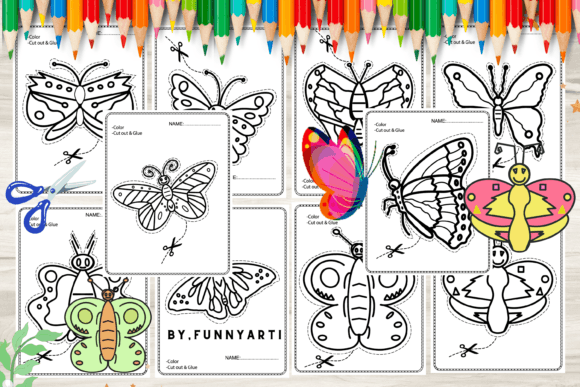
In our digital age, accessible, high-quality printable resources have revolutionized home learning and classroom teaching materials. A well-designed Butterfly Scissor Skills Practice packet, such as one featuring 10 ready-to-print pages in PDF and high-resolution JPG formats, meets contemporary needs.
- Convenience and Flexibility: Educators and parents can instantly download and print the pages, providing unlimited practice copies without the need to hand-draw templates.
- High-Quality Design: Features like thick, dark lines and high-resolution images ensure that the cutting paths are clear and easy to follow for small hands. Enlarging the images for children who need larger guides or for detail work remains crisp, thanks to the high-resolution source files.
- Versatility of Use: These pages fit seamlessly into various modern contexts:
- Classroom Teaching Materials: For structured fine motor centers in preschool and kindergarten.
- KDP (Kindle Direct Publishing) Interior Niches: As part of created activity books for the growing self-publishing market.
- Home Learning Activities: For parents supporting skill development during weekends or holidays.
- Therapeutic Practice: In occupational therapy sessions for children needing targeted motor skill support.
Integrating Cutting Practice into Holistic Learning
Scissor skills should not stand isolated. The butterfly cutting pages encourage a multidisciplinary approach. After the cutting activity is complete, the butterfly cut-outs can be used for:
- Collage and Story Creation: Children can paste their butterflies onto a background to create a spring scene, integrating storytelling and spatial awareness.
- Color Theory Exploration: Using the cut-outs as coloring pages allows for lessons on colors, patterns, and nature's palette.
- Science Connection: The activity can spark conversations about insect life cycles, pollination, and ecology, turning a motor skill task into a science lesson.
This integration ensures that the activity contributes to a broader educational context, building connections across subjects and fostering a love for integrated learning.
Practical Tips for Successful Scissor Skills Practice
To maximize the benefits of butterfly cutting pages, consider these guidelines:
- Start with child-safe scissors that are appropriately sized for small hands.
- Demonstrate the correct grip and motion: thumb in the small hole, fingers in the larger hole, and the motion of opening and closing fully.
- Begin with simpler, larger butterfly shapes before progressing to designs with more intricate, detailed lines.
- Always supervise closely, turning the session into a supportive, interactive time rather than a solitary task.
- Celebrate the effort and the final product, regardless of precision, to build confidence and positive association with the skill.
The Long-Term Significance: Building Muscles for Future Success
The small muscles developed through activities like butterfly cutting are the very muscles that will control a pencil for handwriting, a keyboard for typing, and tools for future crafts and professions. Early, positive practice in fine motor tasks lays a physical and neurological groundwork for academic and life skills. By embedding this practice within a joyful, thematic activity like cutting out butterflies, educators and parents ensure that the development feels organic and motivating.
In conclusion, Butterfly Scissor Skills Practice pages represent a perfect synergy of educational necessity and creative delight. They provide a structured, scalable, and engaging method to help preschool and kindergarten children develop essential coordination, strengthen small muscles, and build the focus required for their ongoing educational journey. As printable resources, they offer modern convenience and quality, fitting beautifully into today's diverse learning environments—from the classroom to the home. By understanding the profound purpose behind this simple activity, we can better guide our young learners as they cut, create, and soar towards their full potential.